
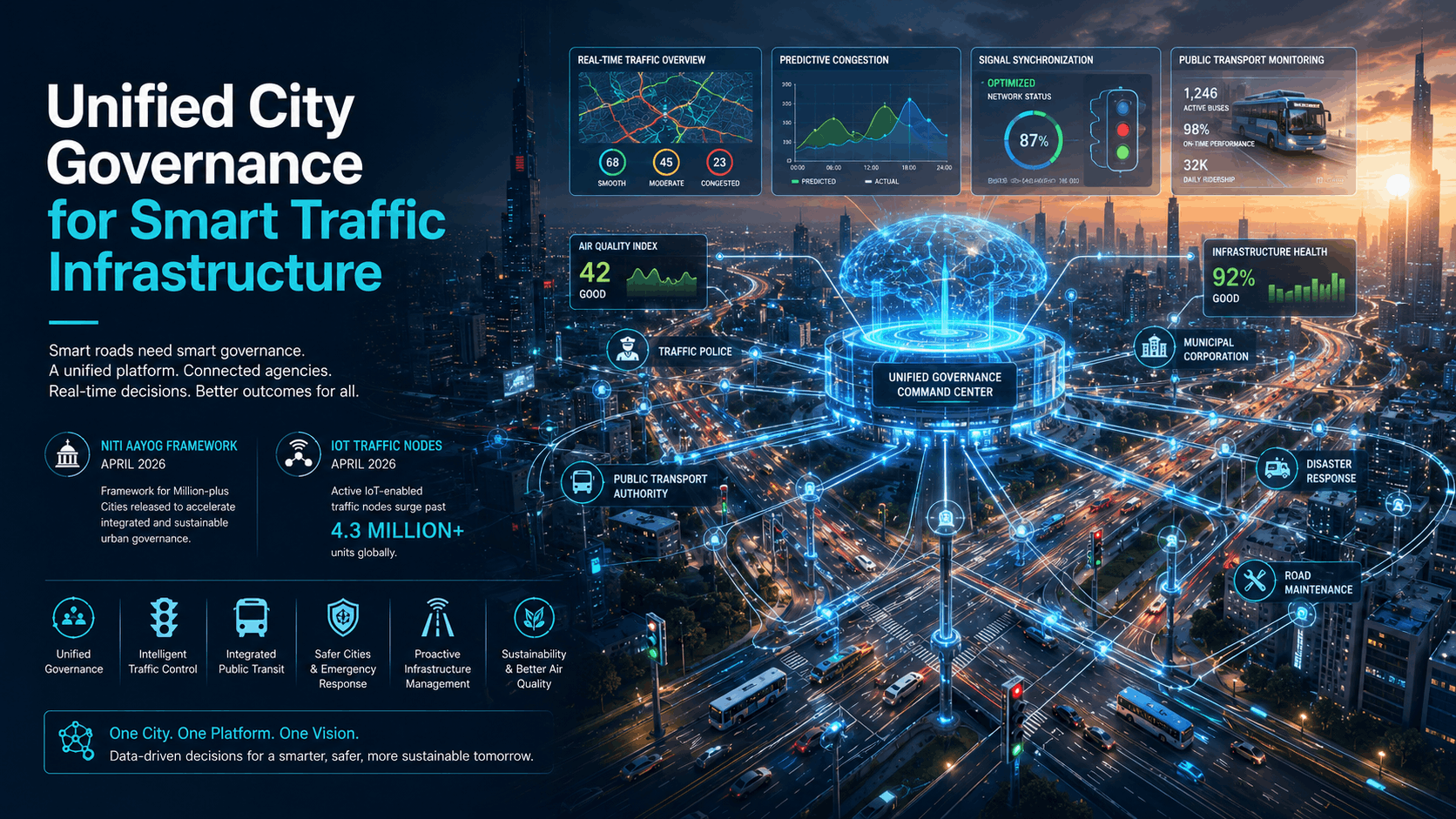
Building smart roads is ineffective if the administrative engines behind them are pulling in opposite directions. In April 2026, two massive markers for the future of transit were dropped: NITI Aayog released its highly anticipated Framework for Million-plus Cities, and global market indicators revealed that active IoT-enabled traffic nodes have surged past 4.3 million units globally.
The message for India’s traffic engineers and urban planners is unmistakable: solving gridlock in 2026 is no longer a challenge of laying asphalt — it is a challenge of data synchronisation and centralised administrative willpower.
Disconnected Agencies
For years, the core complaint across Indian metros has been the “silo” execution of mobility. A metro line is built by one corporation, city buses are managed by another, and local traffic routing is handled by municipal police.
The April 2026 NITI Aayog report identifies this exact fragmentation as the primary bottleneck to effective urban performance. When parastatal agencies function independently, traffic management becomes reactive rather than predictive.
The report strongly advocates for an immediate structural shift: bringing public transport, sanitation and arterial road networks under a single, unified city government led by an empowered Mayor-in-Council.
Software Over Hardware
This administrative shift aligns perfectly with global tech deployment. Concurrent April 2026 industrial data shows that smart traffic systems are seeing a massive transition away from physical hardware overhauls to software-centric management.
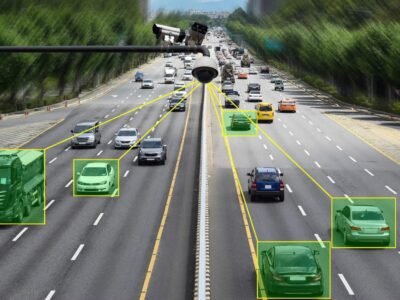
Instead of waiting for multi-year flyover projects, cities are leaning into AI-driven video analytics and Digital Twins. With software making up over 38% of modern traffic ecosystem investments, the goal is clear: optimize the intersections we already have.
Automated Transit Signal Priority (TSP) systems, for instance, are actively cutting bus journey times by up to 15% in dense global corridors, proving that smarter software can substitute for extra lanes.
The blueprint laid out in the newest April 2026 frameworks proves that the future of mobility requires a two-pronged attack. First, local states must amend Municipal Acts to unify transport oversight under one municipal umbrella, as NITI Aayog suggests.
Second, that unified authority must deploy the scalable, software-first IoT traffic networks dominating the market today. Until city administration is as interconnected as the AI traffic signals we install, true urban mobility will remain out of reach.
The report strongly advocates for an immediate structural shift: bringing public transport, sanitation and arterial road networks under a single, unified city government led by an empowered Mayor-in-Council.”