
In April Istanbul became the global meeting point for intelligent transport as thousands of experts convened for the 17th ITS European Congress. One message that dominated the agenda: Mobility’s evolution is being defined by digitalisation, automation and connected capabilities. From the Show floor, five most compelling innovations emerged.
IETT: Bus driver simulation test
Istanbul’s public transport authority, İstanbul Elektrik Tramvay ve Tünel İşletmeleri (IETT), brought its new bus driver training simulator to the showfloor. Developed in-house, the system has recently been integrated into the city’s official bus driver qualification process.
It is designed to replicate the experience of operating a city bus without leaving the depot. The setup includes a bus seat, a Driver Safety Monitoring (DSM) camera, pedals and a gear system, alongside passenger information displays and a full recording rig.
Trainees navigate routes, approach bus stops, manage passenger boarding and alighting and return vehicles to the garage, mirroring real-world conditions in a simulated environment.
The technology now sits alongside theory exams and on-road testing in IETT’s driver assessment pathway.
The simulator is equipped with safety features such as fatigue detection, triggering alerts when it detects a tired driver, and has a built-in call button linking directly to operations control. IETT plans to scale the simulator to a full cabin with physical vibrations to more closely mimic a live bus, similar to advanced flight simulators.
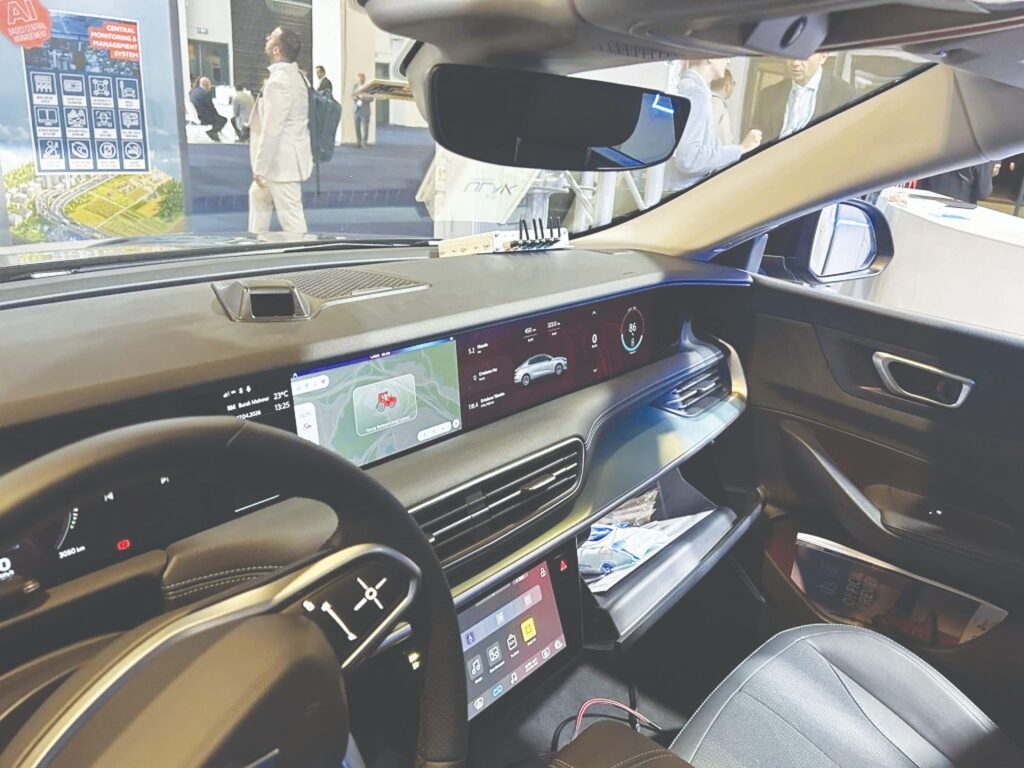
Türksat: Powering Turkey’s first intelligent highway
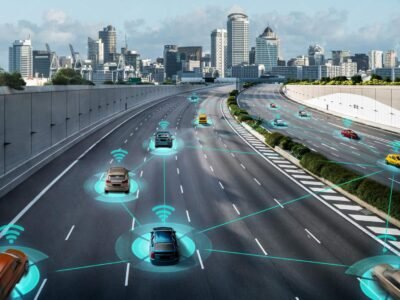
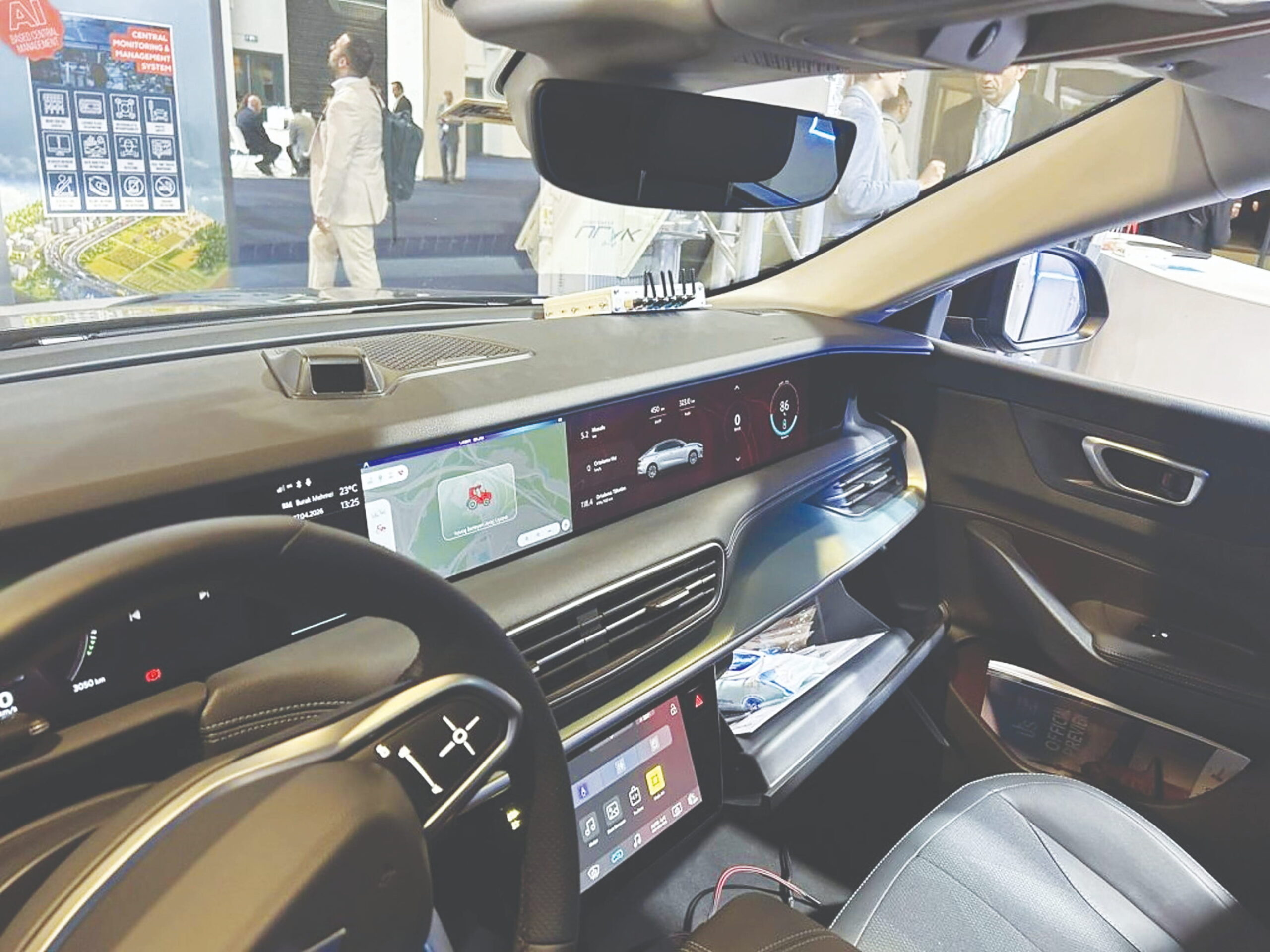
Turkey’s state-backed satellite operator Türksat unveiled the technology behind the country’s first 5G-enabled smart traffic corridor. Stretching 40 kilometres between Hasdal junction and Istanbul Airport, the government-backed corridor went live earlier this year. It combines roadside units embedded with sensors and onboard vehicle systems to collect and distribute real-time data, from weather conditions to traffic incidents.
The information is relayed instantly via roadside message boards and directly onto in-vehicle screens. For now, the system is compatible with vehicles produced by Turkish manufacturer Togg.
A second phase is already in the pipeline: a network of more than 100km looping around Ankara, with construction due to begin within six months and expected to take around two years. This phase will also introduce a mobile app, allowing drivers without in-vehicle screens to receive alerts on their smartphones.
Romo: Turning vehicle data into insight
Dutch initiative Romo has set out a model for turning vehicle data into actionable insight for public road authorities. Short for “Road Monitor”, the project pools data captured by vehicle sensors and reuses it for public infrastructure management. Backed by the Dutch Ministry of Infrastructure and Water Management, the programme brings together 11 innovation partners selected through a public tender, including Mercedes-Benz and Stellantis-owned Mobilisights.
Following earlier pilots, the full-scale rollout began at the start of this year, with around 500,000 connected vehicles now feeding data into the system. No additional hardware is required, as Romo relies entirely on repurposing existing
in-vehicle sensors.
The data is applied across three use cases. First, weather management, enabling highway teams to act proactively, for example by salting roads. Second, infrastructure maintenance, including identifying surface issues such as potholes earlier. Third, safety hotspots, where insights such as harsh braking events or pedestrian near-misses help flag high-risk locations.
Hop’s teleoperated e-scooter
Shared micromobility operator Hop brought its e-scooter fleet to the showfloor and offered a glimpse of what is coming next. The company, which serves over four million users across more than 20 cities in Turkey, Greece and Montenegro, let Congress attendees ride its e-scooters on the test track. Hop is also working on a more radical development: a three-wheeled, 5G-enabled e-scooter designed for teleoperated control.
The concept would let staff reposition vehicles remotely, reducing manual rebalancing. It could also reshape the user experience, enabling features such as remote reservations, with a scooter driven to meet a rider as they step off a ferry or train.
Swarco’s traffic management digital twin
Austrian traffic technology firm Swarco showcased a digital twin platform designed to help cities move from reactive traffic control to predictive, data-led management. The company demonstrated the system using a live deployment in Germany, where it has built a virtual model of a city traffic network.
The platform ingests real-time data from traffic signal controllers and detection systems, such as vehicle speeds, queue lengths and delays, feeding it into a simulation that mirrors conditions on the ground.
Running behind the scenes is an AI-powered forecasting engine that generates rolling traffic predictions. Updated every five minutes, the system produces 12 forecasts for the next hour, letting transport authorities anticipate changes in traffic volumes before they materialise. The predictions feed a “Strategy Manager” module that translates them into operational responses, recommending or triggering interventions such as diversions when congestion is forecast, or adjusting signal timings to give cyclists longer green phases when activity rises.