

AI redefines mobility surveillance by shifting it from passive video recording to real-time interpretation, where systems detect violations, assess incidents and trigger responses without waiting for manual intervention. From real-time enforcement to predictive safety and sustainable traffic management, for Sparsh, AI is no longer optional – it is foundational.
Sparsh has established itself as a trusted name in smart surveillance since 2002, contributing to safety from borders to homes. Built on the philosophy of Make in India and Manufacturing in India, Sparsh solutions are designed for complex operating conditions, scale, diversity, and complexity.
With deployments across:
• Highways and tunnels
• Railways (over 50% of stations nationwide)
• Airports (40+ airports)
• Defence, paramilitary, and border security
• Public spaces, smart cities, and critical infrastructure
Mobility Surveillance, Redefined by AI
AI-powered mobility surveillance integrates computer vision, edge AI, IoT, and intelligent analytics — processing critical events at the edge to minimise latency, while central platforms aggregate insights for enforcement, planning, and audit. Unlike traditional systems that depend heavily on manual monitoring and post-event analysis, AI-driven platforms enable:
• Automated, real-time detection and analysis
• Faster incident response and effective enforcement
• Proactive alerts with predictive insights
• Scalable deployments across cities, highways, and multi-location environments
• Secure, compliant, and audit-ready system architecture
This intelligence empowers authorities to respond decisively – reducing delays, improving safety outcomes, and enhancing operational efficiency.
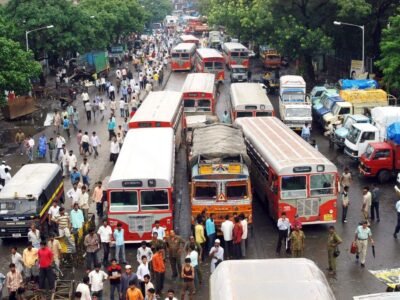
Intelligent Traffic & Highway Management
AI-powered mobility surveillance enables deep visibility into traffic behaviour and road conditions, supporting a wide range of intelligent use cases, including:
• High-speed Automatic Number Plate Recognition and vehicle classification (up to 160 kmph)
• Wrong-way driving and lane violation detection
• Accident, stalled vehicle, and road condition detection under ITMS
• Vehicle counting and classification for traffic planning
• Adaptive signal traffic management
• MLFF (Multi-Lane Free Flow) surveillance is an AI-powered traffic solution that enables barrier-less, real-time vehicle detection and tracking across multiple lanes for faster, smarter traffic flow.
These capabilities help authorities shift from manual monitoring to data-driven traffic orchestration.
These mission-grade devices enable real-time situational awareness and faster decision-making in critical operations.”
Cameras for Mission-Critical Mobility
AI intelligence is only as effective as the data it captures. Advanced camera systems designed for highways and urban mobility environments enable precise, high-speed, and low-light capture, ensuring accuracy under real-world conditions.
Key camera capabilities include:
• High-speed ANPR cameras (160 kmph, 60 FPS)
• LPIC cameras with in-built IR (60 FPS)
• PTZ cameras with
36× zoom and up to
250m night vision
• ICIS cameras with
in-built IR
• Booth and plaza surveillance cameras with audio support
Enhanced imaging features such as 0.001 Lux starlight performance, highlight compensation (HLC), high-quality deblur, LPR image modes, and integrated supplementary lighting ensure superior image quality for 24×7 traffic monitoring. These imaging capabilities ensure that AI analytics operate on high-quality data, directly improving detection accuracy and reducing false violations

Connected Mobility & Emergency Solutions
Beyond fixed infrastructure, AI-powered mobility surveillance extends to wearable and in-vehicle intelligence.
Solutions include:
• Body-worn cameras with built-in face recognition (up to 10,000 faces) and vibration alerts
• Dash cameras with Driver Monitoring Systems (DMS) for fatigue and distraction detection
• Torch cameras and wearable devices with live streaming, snapshots, and alerts over 4G/LTE
• Cluster intercom systems for coordinated emergency response