
Earlier, we used to have paper RCs, now we have smart card RCs. We are talking of going one step further to see if we can have a mobile wallet on the mobile phone and have all the personalized documents and other such important things on it. This will do away with the carrying of documents and even smart card totally. We are also looking at each vehicle having a very standardized number plate and RFID tags. So the user will not have to bother at various toll booths or testing stations. Things can be seamlessly integrated as far as traffic department, NHAI, MSRDC, and traffic police are concerned. All these can be brought onto the same platform and these Acts and rules and the changes in them will allow such things to happen.
E-rickshaws are best suited for feeder services. They cannot cater to trunk routes.
Just like the MVA, one very important aspect is the Road Safety Bill. How would you be implementing it?
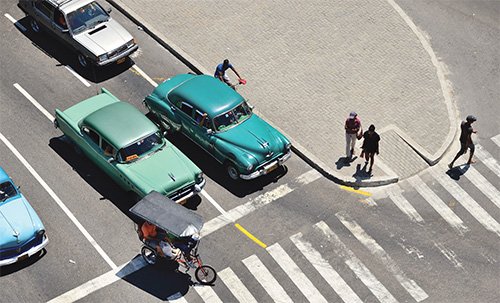 Broadly, there are three aspects to be considered for road accidents. One is the mistake of the person driving the vehicle – he dozes off or he is drunk or he simply loses control over the vehicle. The second aspect is the problems with the vehicle – the brakes fail or the mechanism does not work properly. And the third aspect is the aspect of road engineering – the curve is too blind or the bridge is not proper or the gradient is not correct. So, these three aspects need to be tackled simultaneously. We have identified what we call ‘black spots’ in the state where the accident frequency is higher than the other places and these spots need specific changes in road engineering and road design. These include signage, widening and other aspects. Also, the aspect of vehicles needs to be looked at like for example, if the vehicles are not tested in an automated fashion, it can lead to accidents. So, good testing standards can take care of it. But the most important aspect is undoubtedly the part where drivers are concerned. And nothing short of proper training coupled with proper enforcement will help in this case. This requires computerization to a large extent with seamless integration of various departments. All this is being planned and is in various stages of implementation. In a few years, I think, we will be witnessing a sea change in the scenario.
I believe the behavioural pattern of the road user too, not just the driver, is very important.
Yes, not only drivers but other stakeholders too play a role. Even pedestrians or cattle moving on the roads lead to accidents. They disrupt the basic traffic discipline. One interesting thing which we are planning along with the department of education is how we can introduce some topics of traffic discipline to children in schools. We had done the pilot in one district. So, we are in talks with the education department on whether we can include this as a part of the curriculum but without exams — just to instill a basic civic sense in the future citizens. That is one big project that we are looking forward to.
We all know that motor licensing system has gone online. What challenges you have been facing?
Actually, we say that it is online but to be very fair, many improvements need to be made in the process. One thing is the user interface — it has to be so simple that a common person visiting the site should understand what it means. Otherwise, it doesn’t make sense to have a computer system which can be operated only by middlemen. That is one part that we are requesting the NIC to change.
Secondly, the processes itself needs to be looked into — whether we can have changes in the rules to reduce the hassle caused to the public. For example, for giving learning license right now, it is mandatory for the applicant to come physically to either X or Y place. A change is required to see if this can be dispensed with? It requires a change in the rule and I think it is being worked upon at the level of government of India. Once this is done, probably you will be able to just apply online and get the license on email in PDF or whatever format.
The other aspect is about the testing for learning license and permanent license. Yes, the person has to go to the authorized testing station which, right now are at district levels. So, since his driving skills are to be tested, we need to see if a simulator or something like that can make things easy. But one thing is very clear now: at least appointments are fixed online. The queue is obviously formulated by a computer, something like the queues at the passport offices. So, that much uncertainty or discretion at the district level is done away with and there is a predictability that a person who is going to be tested on X day at Y time is actually tested on X day at Y time. But we are looking for more improvements too.